Ceramic Sand B40 for Aluminum alloy surface treatment
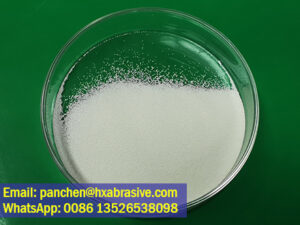
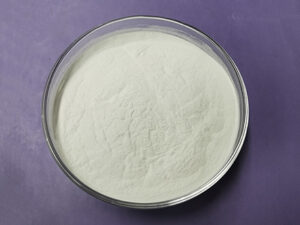
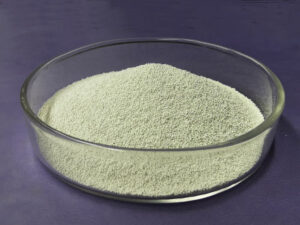
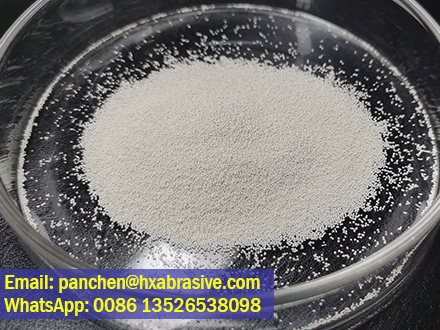
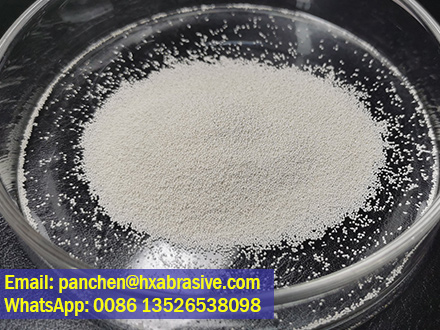
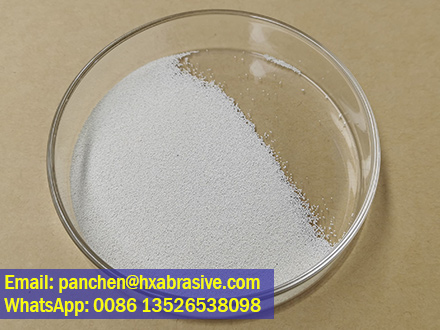
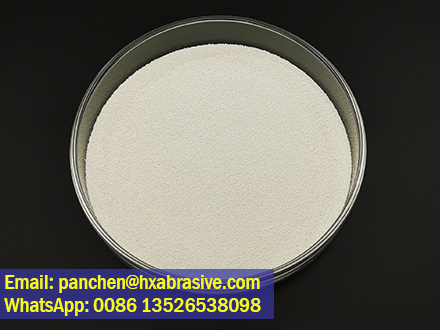
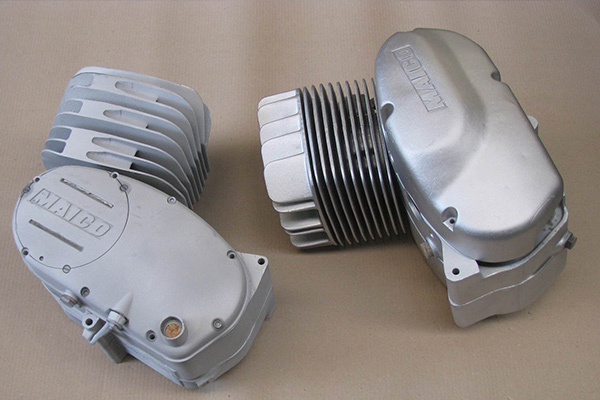
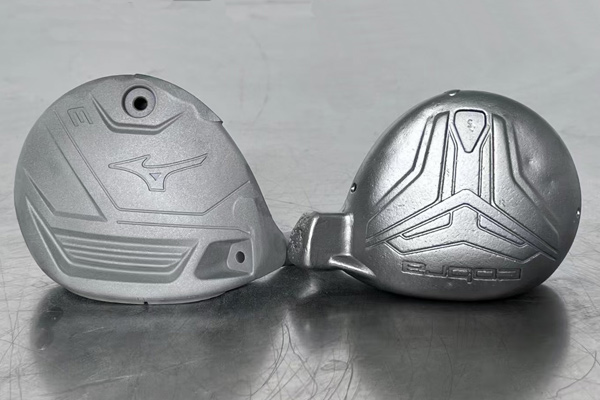
Ceramic Sand B40 is a spherical zirconia ceramic abrasive designed for aluminum alloy surface treatment. It has low hardness and rounded grain shape, so it won’t create deep cutting marks or embed into soft aluminum substrates. It delivers uniform matte and satin finishes while reducing surface stress after blasting. This sand features excellent recycling performance and low dust generation, which supports cleaner workshop conditions. It is widely used for deburring, surface texturing and pre-treatment before coating or anodizing on 3C aluminum parts, automotive aluminum components and aluminum castings.
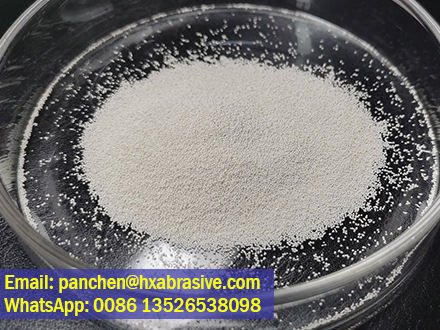
Product Name:Ceramic Sand B40
Particle size: 250-425um(0.25-0.425mm)
Other Names:Ceramic sand B40, Zircon sand, Zirblast B40, Zircon beads, Ceramic shotblasting media, Ceramic microsphere, Micro ceramic ball Microsfere di ceramica.Pallinatura Ceramica,Micropallinatura ceramica, Microbilles de céramique,Billes céramiques, керамических шариков, Керамические микросферы, Microesferas de circonio, Microesfera o bola cerámica, Microesferas de cerámica
Characteristics of Ceramic Sand B40 for Aluminum alloy surface treatment:
Durability: Long-lasting due to high fracture resistance.
Reusability: Can be recycled multiple times, reducing cost.
Smooth Finish: Provides a uniform, matte, or satin surface without embedding.
Low Contamination: Chemically inert, no metallic residues.
Chemical composition of Ceramic Sand B40:
| Chemical | Typical value(%) | Value range(%) |
| ZrO2+HfO2 | 63.80 | 60-70 |
| SiO2 | 26.82 | 28-33 |
| AL2O3 | 9.08 | Max 10 |
| Fe2O3 | 0.03 | Max 0.1 |
| TiO2 | 0.24 | Max 0.4% |
Physical Index:
| Item | Standard Value | Measured Value |
| Particle Size | +40#(0.425mm) <5% +50#(0.300mm) – +60#(0.250mm) – -60#(0.250mm) <5% | 0.5% 76.5% 21% 2% |
| Specific Gravity | 3.6-3.95 g/cm3 | 3.86 g/cm3 |
| Bulk Density | Min. 2.30 g/cm3 | 2.32 g/cm3 |
| Vickers Hardness | Min. 700 HV | 728 HV |
Other Specification:
| Specification | Particle size range |
| B20 | 600-850 um |
| B30 | 425-600 um |
| B40 | 250-425 um |
| B60 | 125-250 um |
| B80 | 180-250 um |
| B100 | 125-180 um |
| B120 | 63-125 um |
| B125 | 0-125 um |
| B170 | 45-90 um |
| B205 | 0-63 um |
| B400 | 30-63 um |
| B500 | 10-30 um |
*Other customized sizes are available.
Applications of Ceramic beads:
Surface Cleaning: Removes rust, oxides, and coatings.
Peening: Induces compressive stress to improve fatigue resistance.
Deburring: Smoothens edges on machined parts.
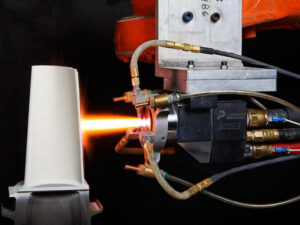
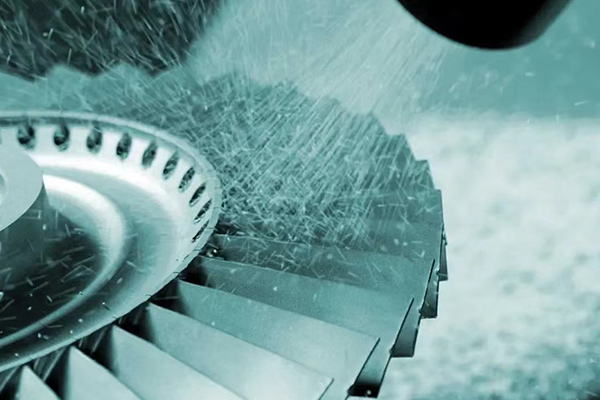
Aerospace & Automotive: Used on turbine blades, engine components.
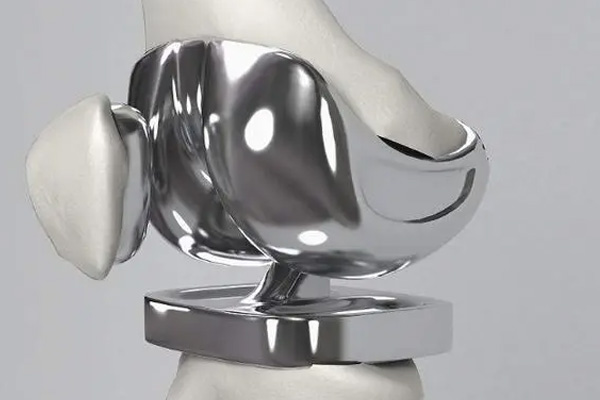
Medical & Electronics: Precision cleaning without damage.
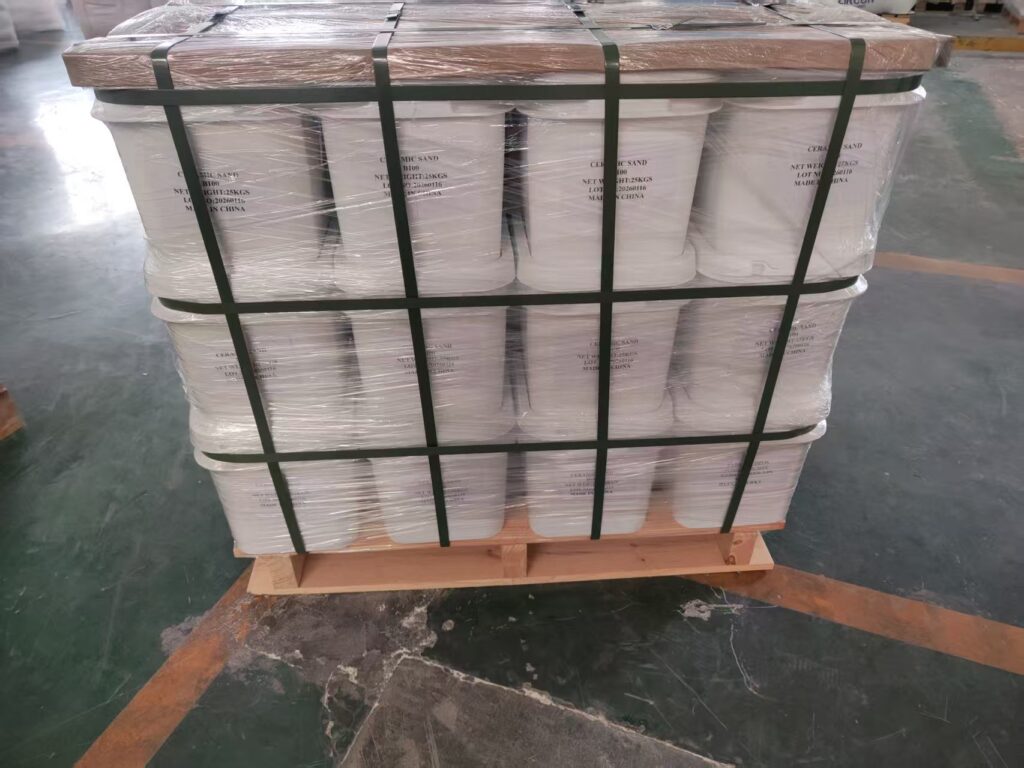
Ceramic Beads Package:
FAQ:
1. Q: Are ceramic beads, zirconia sand, and zirconium silicate sand the same product?
A: There are many zirconia-based products on the market, and almost all originate from zircon sand; the differences lie primarily in processing and purification methods. Zircon sand consists mainly of the mineral zirconium silicate, with a chemical composition of 60–70% zirconium oxide. In the sandblasting industry, the terms “ceramic beads,” “zirconia sand,” and “zirconium silicate sand” refer to the same product—material derived from electro-fused zircon sand.
2. Q: Can zirconia sand replace glass beads?
A: In terms of blasting results, ceramic beads can fully replace glass beads and offer the advantages of higher efficiency and a longer service life (due to recyclability). However, ceramic beads entail a higher initial investment cost and are best suited for blasting high-end workpieces.
3. Q: What is the raw material used to produce ceramic blasting beads?
A: Ceramic blasting beads are manufactured from zircon sand via high-temperature electro-fusion; zircon sand is the primary raw material. Haixu Abrasives is a professional manufacturer of ceramic beads; we use Australian zircon sand with a 66% zirconia content, resulting in beads that offer high strength and excellent durability.
4. Q: How do I select the right particle size for ceramic beads?
A: Selection depends on the desired metal surface roughness. Finer ceramic beads produce a smoother surface finish with lower roughness.
5. Q: Can ceramic beads be exported?
A: Although ceramic beads contain zirconium oxide, the zirconium cannot be extracted separately from the material; therefore, ceramic beads are eligible for export.